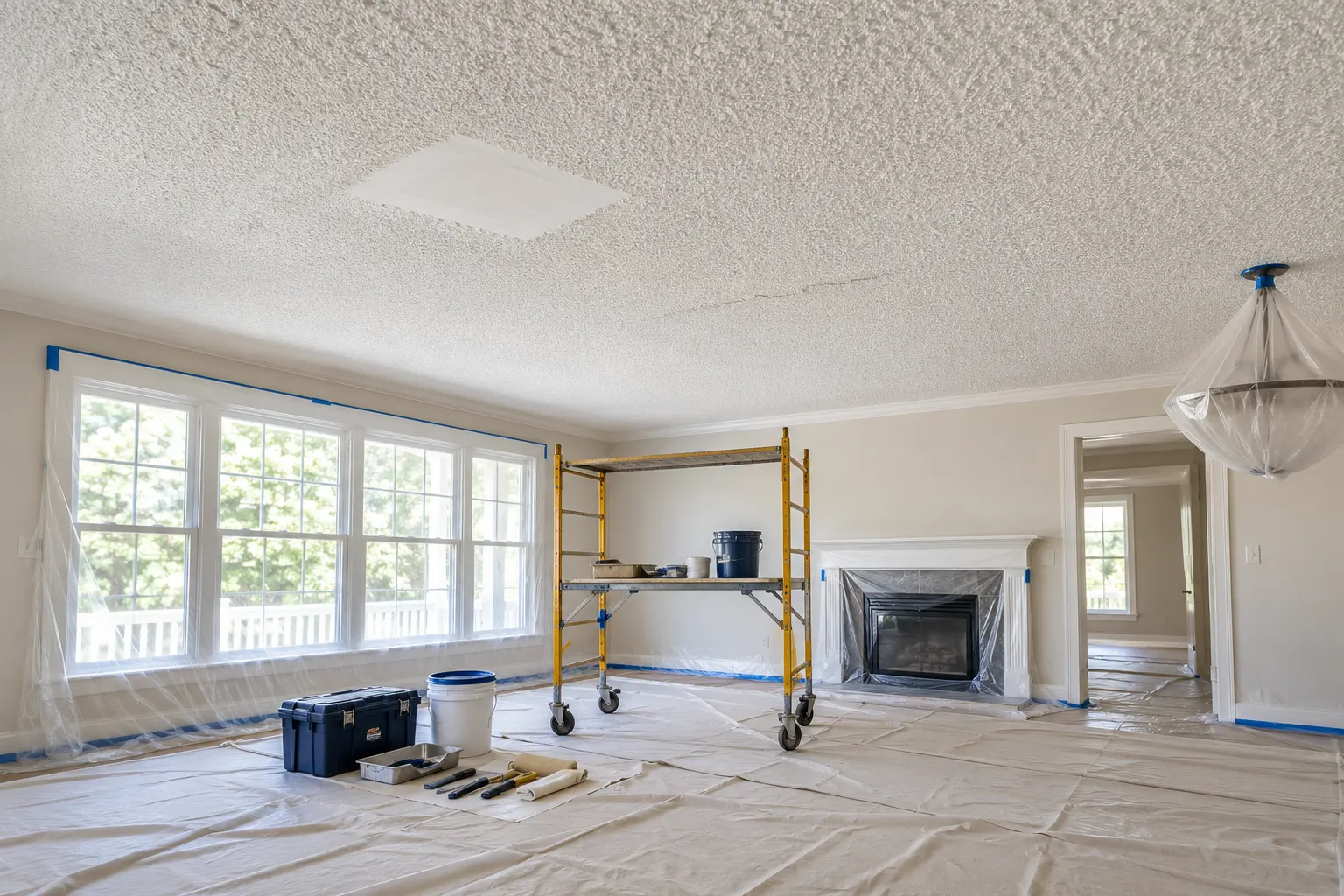
The short answer
A sound popcorn ceiling can sometimes be repainted, but paint will not correct loose texture, staining, cracks, poor past repairs, or a finish you no longer want. The right choice begins with condition, history, safety, and the desired final appearance.
Start with the ceiling's condition—not the color
If the texture is firmly bonded, dry, reasonably even, and free of widespread damage, a careful recoat may refresh the ceiling without changing its profile. That is different from a ceiling with crumbling texture, repeated water staining, long cracks, sagging areas, or patches that stand out in side light.
Painting can also make later removal more difficult because the coating may seal the texture. Before choosing the quickest-looking option, decide whether the real goal is a brighter version of the existing texture or a smooth, more current ceiling. That distinction changes the scope from coating work to ceiling renovation.
Do not disturb a texture with an unknown history
Textured ceilings and the coatings beneath them can contain materials that should not be sanded, scraped, or drilled without appropriate evaluation. The age of the property, renovation history, and prior repairs may be unclear even when the room looks well maintained.
If the ceiling's composition is unknown, pause before any destructive test or do-it-yourself scraping. Appropriate sampling or testing should be handled through a qualified provider, and any required containment or abatement should be completed by the properly qualified trade. FullScope can then define the paint, drywall, and finish work that follows a safe clearance and an approved scope.
When repainting may be the practical choice
Recoating may fit when the homeowner is comfortable keeping the texture, the surface is stable, stains have a known and corrected cause, and only a uniform color refresh is needed. The coating and application method must suit the existing texture so the finish does not become overloaded, patchy, or damaged during application.
The room still needs careful protection. Ceiling fixtures, vents, walls, floors, furniture, and adjacent openings should be addressed before work begins. Small repairs should be evaluated first because a new bright finish can make mismatched texture more noticeable rather than less.
When repair or partial blending deserves attention
Isolated cracks, previous electrical openings, fastener movement, water-damaged areas, or uneven patches may call for localized drywall repair and texture matching. Matching popcorn or another sprayed texture is an appearance judgment: age, paint buildup, aggregate size, application pattern, and lighting all affect how closely a repair blends.
A sample or test area can help set expectations before the entire room is finished. If several patches are already visible, repeated spot work may cost time without producing the uniform appearance the owner expects. At that point, broader removal or a new skim-coat system may be the better long-term plan.
What professional removal actually includes
Removal is more than scraping texture. The scope can include isolating the room, protecting floors and walls, removing or covering fixtures, softening and removing suitable texture, collecting debris, repairing the drywall substrate, treating joints and defects, sanding, checking the surface under light, priming, and applying finish paint.
The exposed ceiling may reveal old repairs, damaged face paper, uneven joints, or previous coatings that do not release consistently. A useful estimate explains how those conditions will be handled and what finish standard is expected. Large windows and strong side lighting can justify more surface refinement than a low-light utility room.
Plan the work around the entire room
Ceiling work affects more than the ceiling. Dust control, access, furniture movement, fixture work, wall protection, HVAC registers, and the order of wall painting all matter. If the walls also need painting, coordinating the ceiling renovation first can reduce duplicated protection and touch-up work.
Occupied homes may be scheduled room by room, while an empty renovation can allow broader containment and a faster sequence. For Hickory and Catawba Valley remodels, Lake Norman homes, and High Country properties, the same decision framework applies: verify the surface, choose the finish goal, and write the protection and repair steps into the scope.
Ask these questions during the estimate
Show the estimator every stain, crack, loose area, patch, and room with the same texture. Ask whether the proposal is for repainting, localized repair, complete removal, or a smooth skim finish; what testing or outside work must happen first; how the room will be protected; and which surfaces will be primed and painted afterward.
A clear estimate should also state what happens if hidden substrate damage appears after removal. FullScope can review the visible ceiling condition, discuss the appearance you want, coordinate the approved drywall and painting sequence, and provide a free written estimate for the work within its scope.
Ready to discuss your property? Explore Popcorn Ceiling Removal or request a free estimate below.