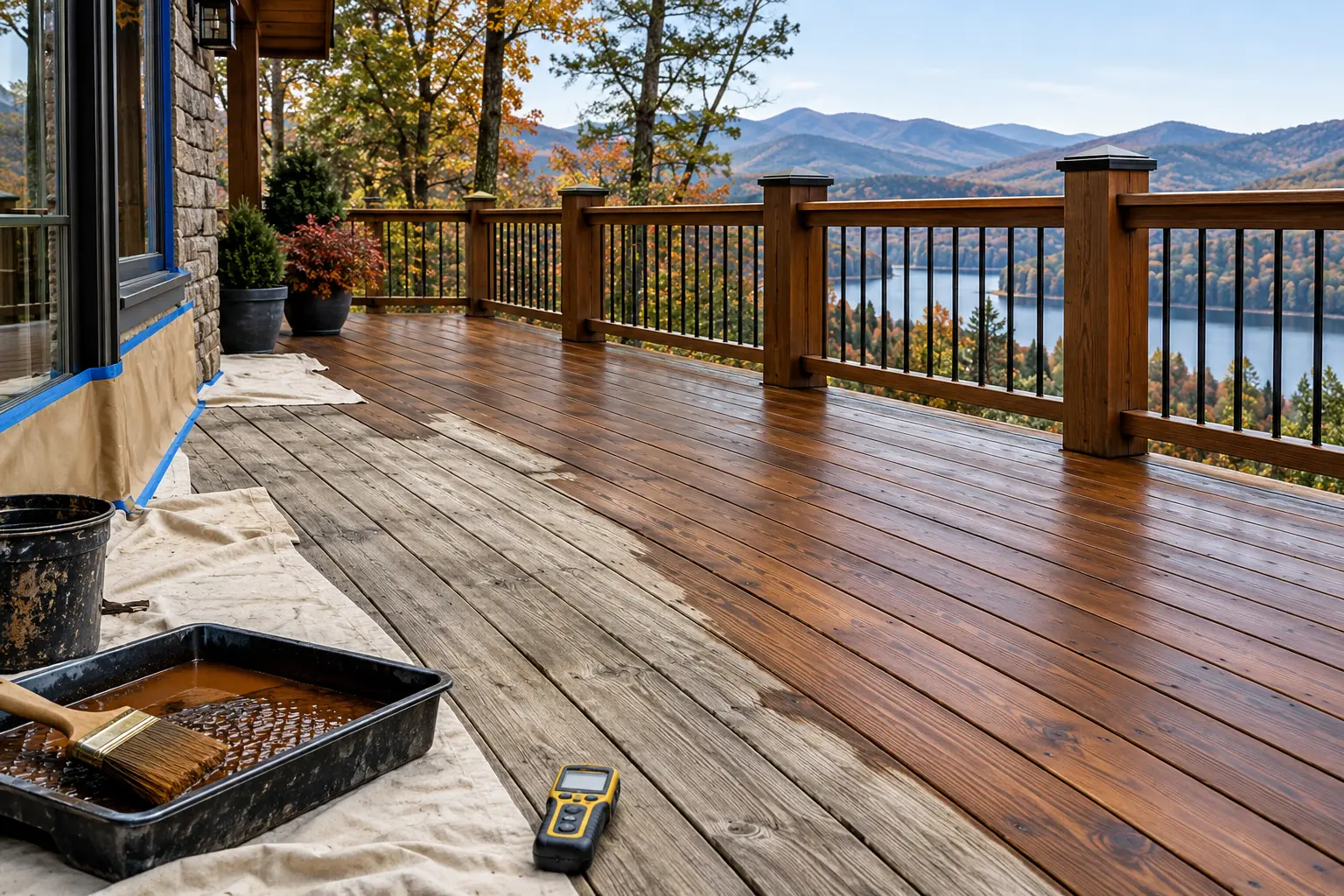
The short answer
The best deck finish is not decided by color alone. Wood condition, the coating already present, sun and moisture exposure, desired appearance, preparation, and future maintenance determine whether paint, solid stain, semi-transparent stain, or another system makes sense.
Begin with the wood and the existing finish
A new or previously stained deck presents a different decision than boards covered by an older film-forming coating. Before selecting a product, inspect for peeling, gray fibers, soft or split boards, raised fasteners, algae, trapped moisture, failed caulk at adjacent surfaces, and areas that stay shaded or wet.
The existing finish matters because a new coating must be compatible with the prepared surface. Applying a penetrating stain over a sealed or painted deck will not create the same result as applying it to sound, absorbent wood. A small test area and an on-site review are more useful than choosing from a color chip alone.
Understand what paint and stain are designed to do
Exterior paint creates an opaque film and offers broad color choices. It can suit certain vertical wood details and previously painted surfaces when preparation and product selection are appropriate. On horizontal deck boards, however, traffic, standing water, movement, and sun can make film failure especially visible when the system is not suited to the surface.
Stain is a category, not one single look. Transparent and semi-transparent products reveal more grain, while solid-color stains create a more opaque appearance. The correct choice depends on the wood, prior finish, exposure, and product instructions. Neither label eliminates the need for cleaning, drying, repairs, and future maintenance.
Choose the appearance you can realistically maintain
Homeowners who want visible grain often prefer a more transparent stain, but weathered boards, mismatched replacement lumber, and old patches may remain visible. A more opaque system can create stronger color uniformity, yet peeling or wear will be easier to see if the coating forms a film or if preparation is incomplete.
Ask how you want the deck to age and how much future surface preparation you are willing to accept. Maintenance coats on a compatible, well-kept stain system may be more straightforward than restoring a coating that has peeled across walking surfaces. The tradeoff should be explained before the first coat, not after wear appears.
Preparation controls the result
A professional scope may include replacing unsound boards, resetting fasteners, protecting siding and landscaping, appropriate cleaning, removing loose coating, sanding or defurring weathered fibers, allowing adequate dry time, and checking whether the wood will accept the selected finish. Aggressive pressure alone is not a complete preparation plan and can damage soft wood fibers.
The deck must be dry enough for the chosen product and the weather window. Shade, humidity, recent rain, overnight dew, and dense wood can extend drying. Coating damp boards can interfere with penetration or adhesion, so the schedule should be based on surface condition and manufacturer requirements rather than a fixed number of hours.
Lake, valley, and mountain exposure change the plan
Lake Norman decks may combine strong sun, humidity, storms, and moisture around waterfront settings. Hickory and the Catawba Valley can bring hot surfaces, intense afternoon sun, pollen, and fast-changing summer weather. Boone, Blowing Rock, and Banner Elk decks add cooler temperatures, snow, shade, freeze-and-thaw cycles, elevation, and steep or elevated access.
These differences do not mean every deck in a region needs one special product. They mean each elevation and section should be inspected. A south-facing stair can weather faster than a covered porch, while a shaded board near vegetation may stay damp longer than an exposed railing only a few feet away.
Do repairs before applying the finish
Finish will not restore structural strength to soft, split, loose, or badly deteriorated boards. Railings, stairs, posts, ledger conditions, and fasteners should be visually reviewed, and damaged components should be repaired or referred to the appropriate trade before cosmetic work proceeds.
Replacement boards may differ in moisture, color, and absorbency from older decking. The estimate should explain whether repairs are included, whether new lumber needs additional conditioning time, and how much color variation may remain after staining. That protects both safety expectations and appearance expectations.
Make the estimate specific to your deck
A useful proposal identifies horizontal boards, stairs, railings, posts, lattice, undersides, adjacent doors or trim, cleaning, coating removal, sanding, repair allowances, selected finish type, number of coats if applicable, access, protection, and exclusions. It should also explain how unexpected failed coating or hidden damage will be approved.
FullScope can inspect the deck, identify the existing finish and visible repairs, discuss the level of wood grain you want to keep, and build a coating plan for the actual exposure. Request a free estimate before buying material so product choice, preparation, and schedule are planned as one system.
Questions to ask before choosing a color
Ask whether the wood is sound, whether the current coating must be removed, which finish categories are compatible, how the deck will be cleaned and dried, which boards need repair, whether handrails and walking surfaces need different treatment, and what future maintenance is likely to involve.
Bring photos of peeling areas, shaded sections, stairs, and the full deck connection to the house. FullScope serves deck and exterior wood projects across Lake Norman, the Catawba Valley, and the High Country, with the final scope based on property condition, access, product requirements, and scheduling availability.
Ready to discuss your property? Explore Deck & Wood Staining or request a free estimate below.